
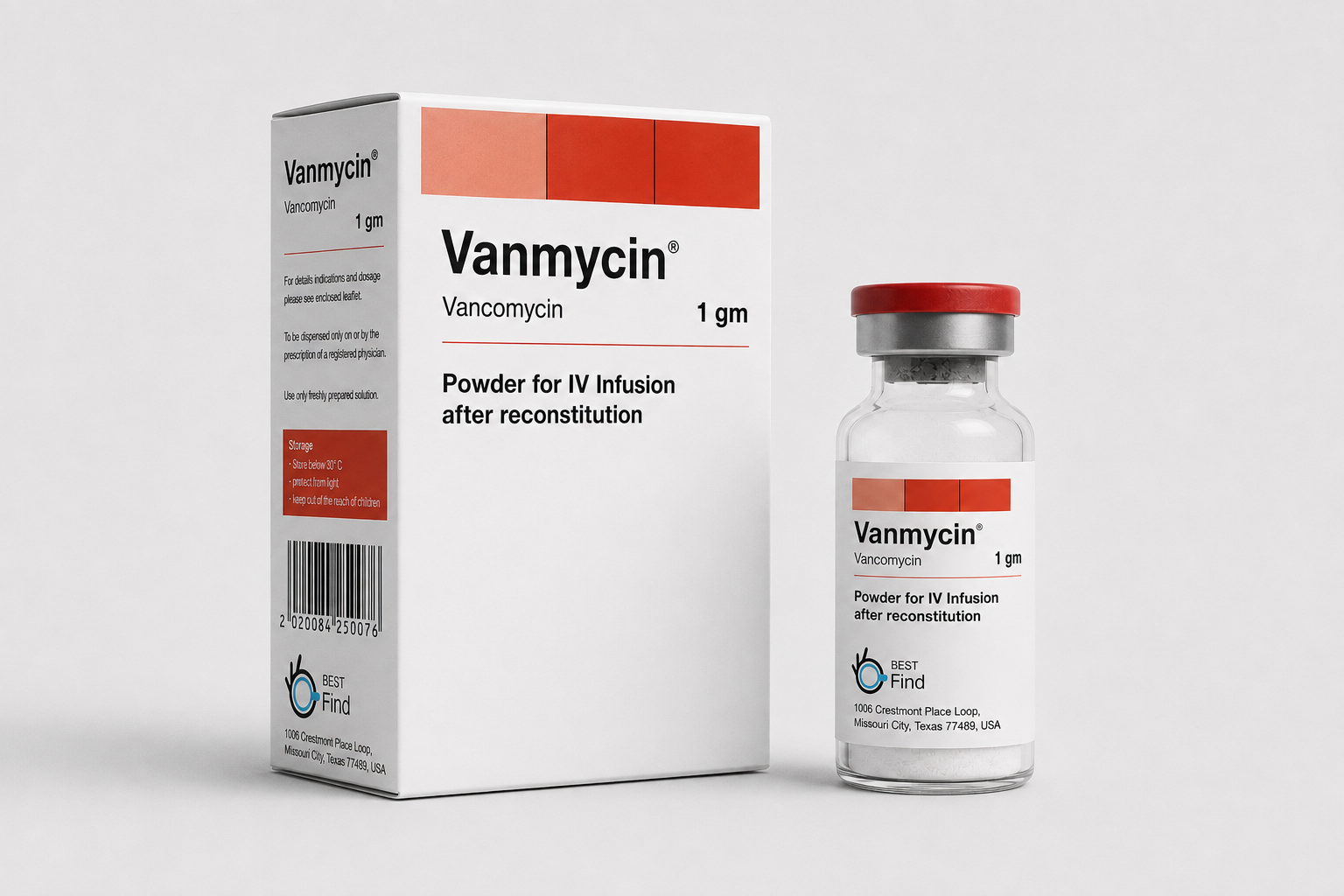
Each vial contains 1 g of vancomycin hydrochloride.
Vancomycin is a glycopeptide antibiotic obtained from Nocardia orientalis (formerly known as Streptomyces orientalis).
Vancomycin is a tricyclic glycopeptide that inhibits bacterial cell wall synthesis by binding with high affinity to the D-alanyl-D-alanine terminus of the cell wall precursors in susceptible bacteria. It also disrupts bacterial cell membrane permeability and RNA synthesis.
Vancomycin is active against Gram-positive bacteria such as staphylococci, streptococci, enterococci, pneumococci, and clostridia. Gram-negative bacteria are resistant to vancomycin.
Vancomycin crosses the placenta and is transferred into umbilical cord blood.
The drug undergoes practically no metabolism. Following parenteral administration, it is eliminated almost entirely via the kidneys by glomerular filtration, with approximately 75–90% excreted as microbiologically active drug within 24 hours.
Indications
For intravenous infusion
Vancomycin is used for the treatment of the following infections in patients of all age groups:
- Complicated skin and soft tissue infections
- Bone and joint infections
- Community-acquired pneumonia
- Hospital-acquired pneumonia, including ventilator-associated pneumonia
- Infective endocarditis
- Bacteremia occurring in association with, or suspected to be associated with, any of the infections listed above.