
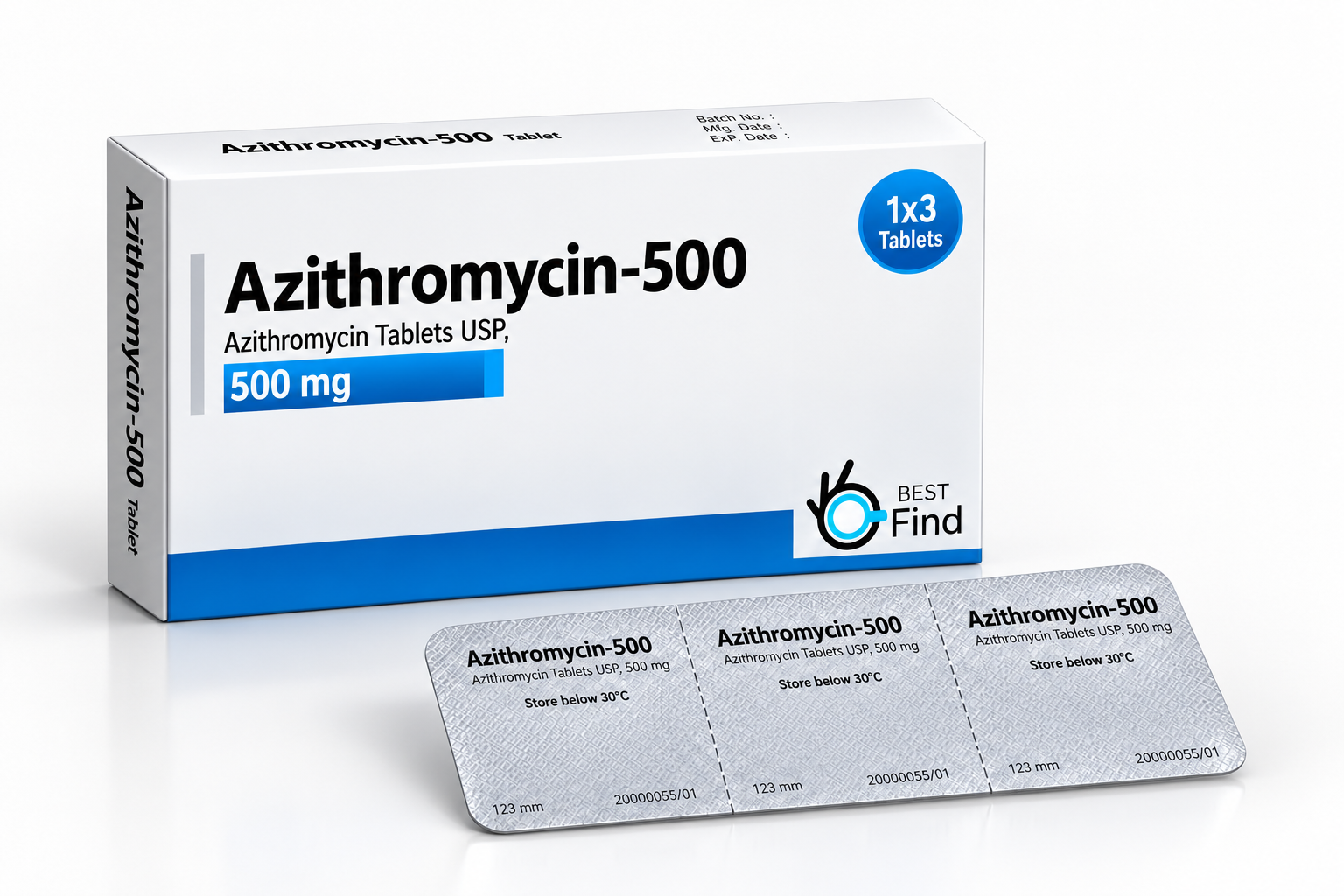
Each tablet contains 500 mg of azithromycin equivalent to azithromycin dihydrate.
Azithromycin binds to the 50S subunit of the ribosome, thereby preventing the translocation of the peptide chain from one side of the ribosome to the other. Thus, it inhibits RNA-dependent protein synthesis in susceptible organisms.
Azithromycin is highly active against microorganisms such as Haemophilus influenzae, Moraxella catarrhalis, Chlamydophila pneumoniae, Chlamydia trachomatis, Legionella pneumophila, Mycobacterium avium, and Mycoplasma pneumoniae.
Indications
The following infections caused by azithromycin-susceptible organisms:
- Acute bacterial sinusitis
- Acute bacterial otitis media
- Pharyngitis and tonsillitis
- Acute exacerbation of chronic bronchitis
- Mild to moderate pneumonia
- Skin and soft tissue infections
- Urethritis and cervicitis caused by Chlamydia trachomatis