
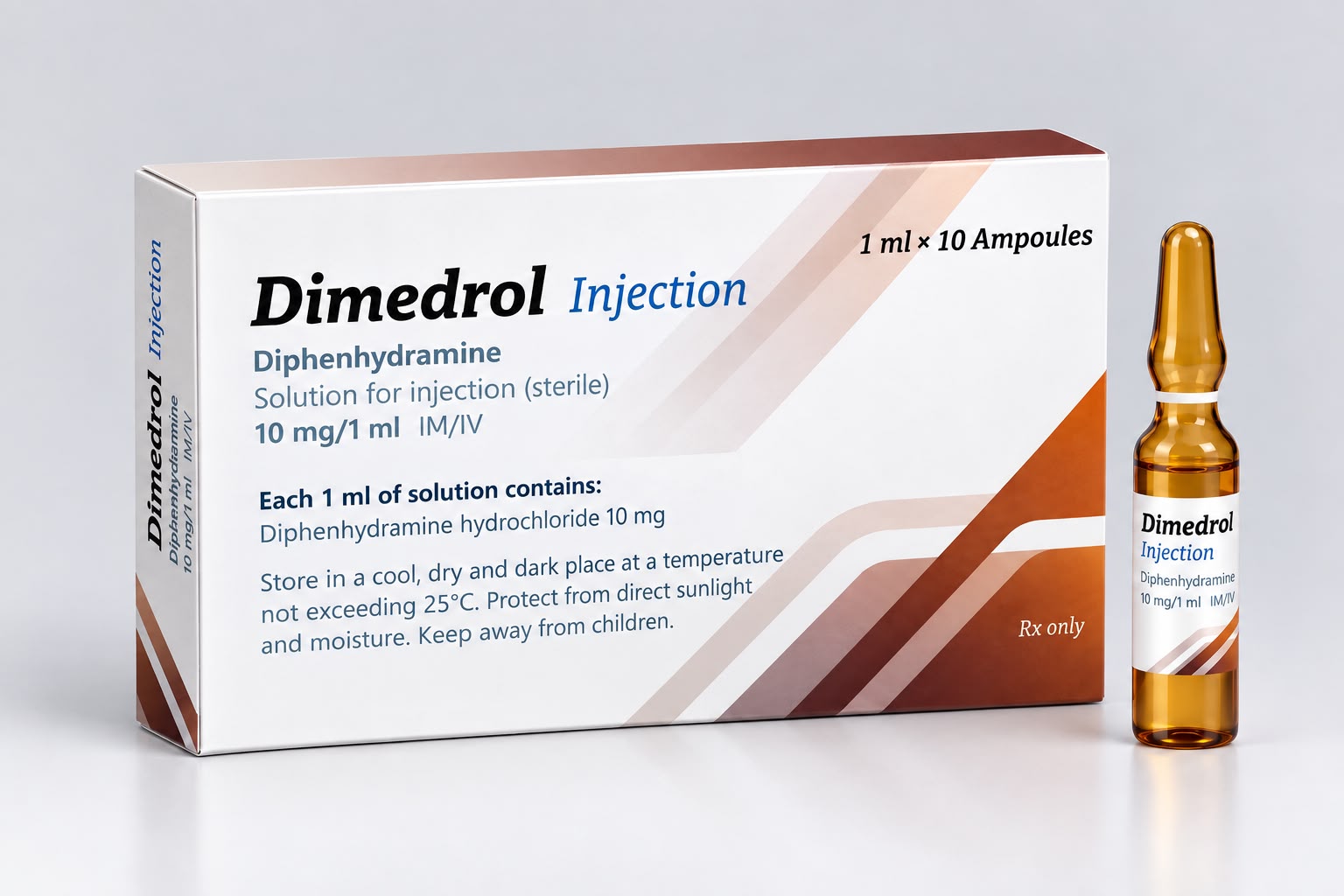
Each 1 mL of the solution contains 10 mg of diphenhydramine hydrochloride.
Diphenhydramine is a first-generation H1-histamine receptor antagonist. Its effects on the central nervous system are associated with the blockade of H1-histamine receptors and cerebral cholinergic receptors. It reduces or prevents histamine-induced smooth muscle spasms, increased capillary permeability, tissue oedema, itching, and hyperaemia; it has local anaesthetic, antiemetic and sedative effects and produces a hypnotic effect.
Antagonism to histamine is mainly related to local vascular reactions, i.e. during inflammation and allergic reactions, rather than systemic effects, which may result in a decrease in arterial blood pressure. However, when administered parenterally to patients with reduced circulating blood volume, a decrease in arterial blood pressure and worsening of existing hypotension may occur.
In individuals with brain injury and epilepsy, epileptic convulsions may occur even at low doses and may precipitate an epileptic seizure.
The effect develops within several minutes and lasts for up to 12 hours.
Indications
The injectable form of diphenhydramine hydrochloride is effective in adults and paediatric patients (excluding newborn and premature infants) when oral treatment is not possible, in the following conditions:
Antihistamine effect: For the relief of allergic reactions to blood or plasma; in anaphylaxis, in combination with adrenaline and other standard measures, as additional treatment after acute symptoms have been brought under control; and for the treatment of other immediate-type allergic conditions when oral therapy is not possible or is contraindicated.
Vomiting and motion-related discomfort: Used for the active treatment of motion sickness (dizziness or nausea associated with speed or movement).
Antiparkinsonian effect: Used in the treatment of parkinsonism when oral treatment is not possible or is contraindicated, particularly:
- In elderly patients who are unable to tolerate potent preparations;
- In cases of mild parkinsonism in other age groups;
- In other cases of parkinsonism where it is used in combination with centrally acting anticholinergic medicines.
It is also used in the complex treatment of Quincke’s oedema, serum sickness, and for premedication.