
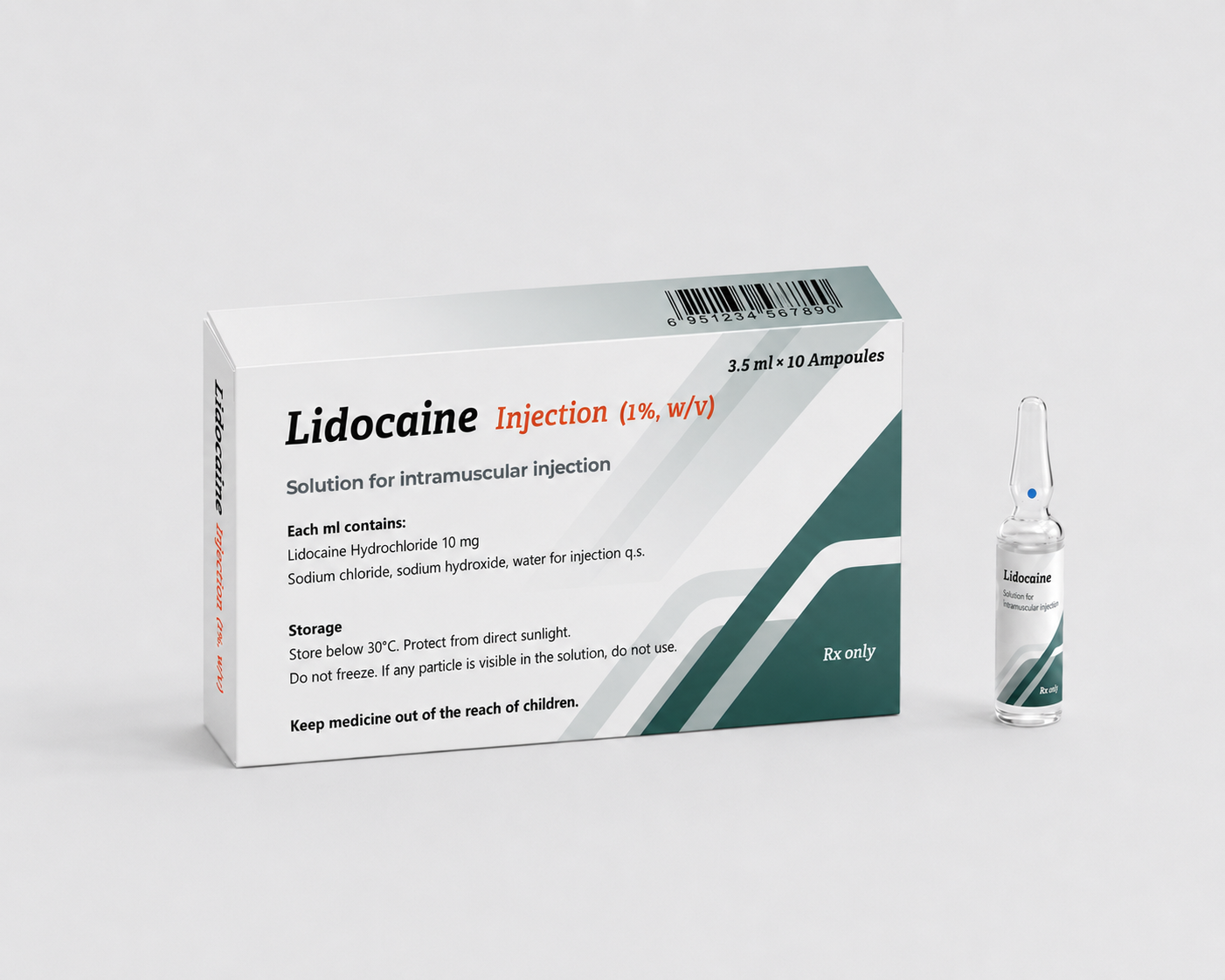
Each 1 mL of solution contains 10 mg of lidocaine hydrochloride.
Lidocaine is used to provide anesthesia through nerve blockade in various areas of the body and for the management of cardiac rhythm disturbances (arrhythmias). Its effect has a rapid onset: approximately 1 minute after intravenous injection and approximately 15 minutes after intramuscular injection. Lidocaine rapidly diffuses into the surrounding tissues. The duration of action is approximately 10–20 minutes following intravenous injection and approximately 60–90 minutes following intramuscular injection.
Indications
Lidocaine is a local anesthetic belonging to the amide group, and its injectable form has a wide range of applications in nerve blockade. It is used for subcutaneous infiltration, brachial plexus nerve blockade, epidural anesthesia, and intravenous regional anesthesia.
In addition, lidocaine is widely used for pain management during endoscopic and dental procedures, particularly in the treatment of ventricular arrhythmias, for local anesthesia of the skin and mucous membranes, and for anesthesia during trauma and surgical procedures.